Best Humidifiers for Everyday Use

Best Humidifiers for Everyday Use

⚠️ Affiliate Disclosure: This post contains affiliate links. If you purchase through our links, we may earn a small commission at no extra cost to you. Full disclosure here.
🔍 Why you can trust this roundup: We reviewed the leading options in this category and narrowed the list to the strongest picks based on performance, value, and real-world usability.

For everyday humidification, the best unit is the one that delivers the right moisture output for your room without over-saturating the air or becoming a maintenance headache. In practical terms, that means looking at tank size, runtime, noise, and coverage first—because a 2L bedroom model and a 7L whole-room design solve very different problems. Most of the humidifiers in this roundup use ultrasonic cool-mist technology, which creates fine water droplets that disperse quickly and quietly, making them a strong fit for bedrooms, nurseries, and plant rooms alike. We’ll also flag the hidden cost that matters over time: replacement filters or wicks, which can add to ownership costs even when the upfront price looks attractive.

Main Points

Our Top Picks

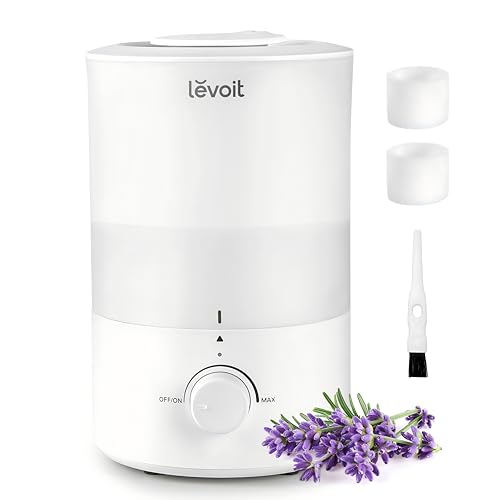
LEVOIT - Humidifiers for Bedroom - Quiet (3L Water Tank) - Cool Mist/Top Fill/Essential Oil Diffuser/25Watt - Home/Large Room - 360° Nozzle - Rapid Ultrasonic Humidification for Baby Nursery/PlantLEVOIT - Humidifiers for Bedroom - Quiet (3L Water Tank) - Cool Mist/Top Fill/Essential Oil Diffuser/25Watt - Home/Large Room - 360° Nozzle - Rapid Ultrasonic Humidification for Baby Nursery/PlantKey Feature: 3L cool-mist ultrasonic humidificationMaterial / Build: Top-fill plastic reservoirBest For: Best for Large RoomsRead Our Analysis Best for Ultra-Quiet NightsHomvana Humidifiers for Bedroom Home, 3.6 L Cool Mist Top-Fill 34H Super Long Time, Quiet 23dB, Baby Humidifier, Oil Diffuser for Large Room, House, Plant, Nursery, Office, BPA FREE, Ultrasonic (Grey)Homvana Humidifiers for Bedroom Home, 3.6 L Cool Mist Top-Fill 34H Super Long Time, Quiet 23dB, Baby Humidifier, Oil Diffuser for Large Room, House, Plant, Nursery, Office, BPA FREE, Ultrasonic (Grey)Key Feature: 3.6L top-fill cool mist tankMaterial / Build: BPA-free ultrasonic plastic constructionBest For: Best for Ultra-Quiet NightsRead Our Analysis Best with Humidity SensorDREO Humidifiers for Bedroom, 3L Top Fill 30H & 26dB Quiet Runtime for Large Room, Cool Mist Ultrasonic Humidifier with Humidity Sensor, Night Light for Home, Baby, Nursery, Plants, New EditionDREO Humidifiers for Bedroom, 3L Top Fill 30H & 26dB Quiet Runtime for Large Room, Cool Mist Ultrasonic Humidifier with Humidity Sensor, Night Light for Home, Baby, Nursery, Plants, New EditionKey Feature: Built-in humidity sensorMaterial / Build: Top-fill ultrasonic tank designBest For: Best with Humidity SensorRead Our Analysis Best Budget Quiet HumidifierClarston 2L Cool Mist Humidifier for Bedroom with 360° Adjustable Nozzle, High and Low Mist Levels, Ultra-Low Noise, Light-Off, No BPA, Auto Shut Off, Ideal Baby Humidifier with Easy Top FillingClarston 2L Cool Mist Humidifier for Bedroom with 360° Adjustable Nozzle, High and Low Mist Levels, Ultra-Low Noise, Light-Off, No BPA, Auto Shut Off, Ideal Baby Humidifier with Easy Top FillingTank Capacity: 2L cool mist reservoirMaterial / Build: BPA-free plastic constructionBest For: Best Budget Quiet HumidifierRead Our Analysis Best for Kids’ Night ComfortMegaWise Topfill 7-colour Night light humidifier for Kid bedroom with 3.5L Large Capacity, No leakage Design Fine Mist Output Auto Shutoff, Essential Oil Safe TankMegaWise Topfill 7-colour Night light humidifier for Kid bedroom with 3.5L Large Capacity, No leakage Design Fine Mist Output Auto Shutoff, Essential Oil Safe TankKey Feature: Fine-mist ultrasonic humidificationMaterial / Build: Leak-resistant top-fill designBest For: Best for Kids’ Night ComfortRead Our Analysis

🏆 Best For: Best for Large Rooms

Best for Large Rooms

The reason this Levoit lands at Best for Large Rooms is straightforward: a 3L tank, 25-watt ultrasonic output, and 360° mist dispersion give it the runtime and coverage consistency that smaller tabletop humidifiers can’t match. In practical terms, that means fewer refills and more stable humidity in spaces where dry air tends to spread fast, especially master bedrooms, nurseries, and medium-to-large living areas. While humidifiers don’t have CADR ratings like air purifiers, the performance metric that matters here is mist output and how evenly that moisture is distributed across the room.

The top-fill design is the real-world win. It makes cleaning and refilling easier, which matters because standing water and mineral buildup are what usually reduce humidifier performance over time. The cool-mist ultrasonic system is quiet enough for sleep, and the 360° nozzle helps avoid the “wet spot” problem you get when mist shoots in only one direction. The built-in essential oil diffuser adds flexibility, though users should be careful not to overdo oils if they’re prioritizing indoor air quality and respiratory comfort.

This is a strong pick for anyone dealing with dry winter air, nighttime congestion, toddler or baby-room dryness, or plant rooms that need steadier humidity. It’s especially useful when you want a low-cost, low-watt option that can run through the night without sounding like a fan appliance. For the best results, place it in a room where you’re trying to maintain moderate humidity, not in an open-concept space that exceeds its effective coverage. Replacement costs are generally limited to routine maintenance—filters are not the main expense here, but if your use includes aromatherapy pads or any optional maintenance parts, budget for occasional small accessory replacements rather than full filter swaps.

The main caveat is that ultrasonic humidifiers can leave mineral dust if you use hard tap water, so distilled or demineralized water is the better choice. Also, like most compact cool-mist units, it won’t replace a whole-house humidification system in very large or multi-room areas. Keep humidity in the 30%–50% range; more than that can encourage dust mites and mold, which defeats the purpose of improving indoor air comfort.

✅ Pros

  • Large 3L tank reduces refills
  • Quiet output supports sleep
  • 360° nozzle improves room coverage

❌ Cons

  • Best with distilled water
  • Not ideal for oversized spaces
3L cool-mist ultrasonic humidification
  • Material / Build: Top-fill plastic reservoir
  • Best For: Best for Large Rooms
  • Size / Dimensions: Compact tabletop footprint
  • Special Feature: 360° nozzle with essential oil diffuser
  • Power: 25-watt energy-efficient operation
  • Homvana Humidifiers for Bedroom Home, 3.6 L Cool Mist Top-Fill 34H Super Long Time, Quiet 23dB, Baby Humidifier, Oil Diffuser for Large Room, House, Plant, Nursery, Office, BPA FREE, Ultrasonic (Grey)

    🏆 Best For: Best for Ultra-Quiet Nights

    Best for Ultra-Quiet Nights

    The Homvana 3.6L Cool Mist Humidifier earns “Best for Ultra-Quiet Nights” because its 23 dB operating noise is low enough to disappear into bedroom background sound—closer to a whisper than a fan. For sleep, that matters: dry-air relief only helps if the unit doesn’t become the new problem. The 3.6-liter tank also supports up to 34 hours of runtime, which means fewer refill interruptions and more consistent humidity through the night. While humidifiers don’t have a CADR like air purifiers, this one is built for moisture delivery in bedrooms, nurseries, and small-to-large living spaces where quiet, steady output is the priority.

    In real use, the top-fill design is the standout convenience feature. It reduces spills, makes cleaning easier, and encourages the kind of regular maintenance that keeps ultrasonic humidifiers performing well. The ultrasonic mist is fine enough to disperse quickly without the heavy plume you’d see from cheaper units, and the BPA-free build is a reassuring choice for families with babies, plants, or sensitive sleepers. It also doubles as an oil diffuser, which adds flexibility, though fragrance use should be light if you’re humidifying for respiratory comfort rather than scent.

    This is a smart buy for anyone prioritizing bedside quiet over high-output whole-room coverage. It’s especially suitable for bedrooms, nurseries, home offices, and guest rooms where you want gentle humidification without fan noise or bright displays. For a typical bedroom, it’s a practical fit; for larger open-plan spaces, expect it to provide localized comfort rather than full-home humidity control. At $33.32, it lands in the budget-friendly range, and there’s no replacement filter cost to factor in because it’s a filterless ultrasonic design—just ongoing cleaning to prevent mineral buildup and keep mist quality consistent.

    The main caveat is that ultrasonic humidifiers like this one can leave white dust if you use hard tap water, so distilled or demineralized water is the best way to protect furniture and keep output cleaner. It also won’t help with particulate removal or allergens the way a true air purifier would, so if your main goal is pollen or dust control, this should be paired with a HEPA unit—not used as a substitute.

    ✅ Pros

    • Exceptionally quiet 23 dB operation
    • Runs up to 34 hours
    • Easy top-fill cleaning and refills

    ❌ Cons

    • Can produce white dust
    • No air-cleaning filtration
    3.6L top-fill cool mist tank
  • Material / Build: BPA-free ultrasonic plastic construction
  • Best For: Best for Ultra-Quiet Nights
  • Size / Dimensions: Compact bedroom-friendly footprint
  • Special Feature: 23dB whisper-quiet operation
  • Coverage: Best for bedrooms and medium rooms
  • DREO Humidifiers for Bedroom, 3L Top Fill 30H & 26dB Quiet Runtime for Large Room, Cool Mist Ultrasonic Humidifier with Humidity Sensor, Night Light for Home, Baby, Nursery, Plants, New Edition

    🏆 Best For: Best with Humidity Sensor

    Best with Humidity Sensor

    The DREO Humidifier earns the Best with Humidity Sensor spot because it turns a simple cool-mist unit into a more controlled indoor air tool. In humidifier terms, that matters: maintaining roughly 40% to 50% relative humidity helps reduce dry-air irritation without pushing a room into the condensation zone where dust mites and mold can thrive. The built-in humidity sensor is the standout here, giving this model a smarter edge over basic single-speed tanks, especially for bedrooms and nurseries where stable moisture is more important than brute output.

    On paper, the practical basics are strong: a 3L top-fill tank, up to 30 hours of runtime, and a claimed 26 dB quiet operation. That combination makes it easy to use overnight without constant refills or noticeable fan noise. Because this is an ultrasonic cool-mist design, there’s no filter media to trap particles like a HEPA air purifier would; instead, it disperses water vapor to raise local humidity, which can make nasal passages feel less dry and help reduce static and throat irritation. It’s best suited to small-to-medium rooms, roughly up to 300 square feet depending on ceiling height and airflow. One cost advantage: there are no replacement filters to buy, so ongoing maintenance is mostly cleaning and occasional descaling rather than recurring filter spend.

    This is a smart buy for anyone who wants a low-fuss bedroom humidifier with better humidity control than the cheapest models offer. It’s especially useful in winter heating season, for baby rooms, for plant shelves, or for apartment bedrooms where dryness is the main problem. If you’re trying to support sleep comfort, protect wooden furniture from overly dry air, or keep indoor humidity in a healthier range, the sensor adds real value because it reduces the chance of over-humidifying a space. For allergy sufferers, though, remember that a humidifier is not an air cleaner—if you need particle removal from pollen, pet dander, or smoke, you’ll still want a true HEPA air purifier alongside it.

    The caveat is that the compact tank size that makes it bedroom-friendly also limits how often it can cover larger rooms at high output. And like any ultrasonic humidifier, it depends on regular cleaning to prevent mineral buildup and keep mist output consistent; if your tap water is hard, you may also notice a light white dust residue over time. In short, it’s a well-priced humidity management tool, not a filtration device.

    ✅ Pros

    • Humidity sensor reduces over-humidifying
    • Quiet enough for sleep
    • No replacement filters required

    ❌ Cons

    • Needs frequent cleaning
    • Limited for large open rooms
    Built-in humidity sensor
  • Material / Build: Top-fill ultrasonic tank design
  • Best For: Best with Humidity Sensor
  • Size / Dimensions: 3L tank, bedroom-friendly footprint
  • Special Feature: 30-hour runtime, 26 dB quiet mode
  • Room Size Coverage: Small to medium rooms, about 300 sq ft
  • Clarston 2L Cool Mist Humidifier for Bedroom with 360° Adjustable Nozzle, High and Low Mist Levels, Ultra-Low Noise, Light-Off, No BPA, Auto Shut Off, Ideal Baby Humidifier with Easy Top Filling

    🏆 Best For: Best Budget Quiet Humidifier

    Best Budget Quiet Humidifier

    The Clarston 2L Cool Mist Humidifier earns its Best Budget Quiet Humidifier spot by doing the fundamentals well at a very approachable $22.99. For a small bedroom or nursery, the 2-liter tank and ultra-low noise operation are the main draw: it can run quietly through the night without the distracting fan whine you often get from cheaper units. In practical terms, this is an air-quality comfort product, not a filtration device, so there’s no CADR to cite and no HEPA efficiency to compare; its job is to raise indoor humidity into the healthier 30%–50% range, where dry-air irritation typically improves.

    The feature set is straightforward but useful: a 360° adjustable nozzle helps direct mist away from walls and bedding, high and low mist modes let you balance output and runtime, and the light-off setting is a nice touch for light sleepers and babies. Auto shutoff adds an important safety layer when the tank runs dry, and the BPA-free construction is a reassuring detail for everyday use. The easy top-filling design also matters more than it sounds—less spill risk, less mess, and fewer reasons to skip refills. For a budget unit, those are meaningful real-world benefits.

    Buy this if you want a no-frills humidifier for a bedroom, dorm, office, or nursery where quiet operation matters more than premium features. It’s a good fit for people dealing with dry winter air, overnight congestion from low humidity, or static-heavy rooms. In room-size terms, a 2L desktop humidifier like this is best kept to small spaces, roughly up to 150 square feet for comfortable day-to-day use, rather than open-plan living areas. Also budget for ongoing maintenance: wick or filter-free designs like this don’t have a filter replacement cost, but you should still plan on regular cleaning to prevent mineral buildup and keep mist output consistent.

    The main caveat is capacity: a 2-liter tank is compact, so higher mist settings will shorten runtime and may require daily refilling. It also won’t meaningfully influence larger spaces or solve ventilation problems the way a whole-home system or air purifier with documented CADR can. If your water is very hard, you may see white dust or scale over time unless you clean it regularly or use distilled water.

    ✅ Pros

    • Whisper-quiet overnight operation
    • Easy top-fill reduces spills
    • Auto shutoff improves safety

    ❌ Cons

    • Small tank needs frequent refills
    • No filter; requires regular cleaning
    2L cool mist reservoir
  • Material / Build: BPA-free plastic construction
  • Best For: Best Budget Quiet Humidifier
  • Coverage Area: Small rooms up to 150 sq. ft.
  • Special Feature: 360° nozzle with light-off mode
  • Maintenance Cost: No filter replacement cost
  • MegaWise Topfill 7-colour Night light humidifier for Kid bedroom with 3.5L Large Capacity, No leakage Design Fine Mist Output Auto Shutoff, Essential Oil Safe Tank

    🏆 Best For: Best for Kids’ Night Comfort

    Best for Kids’ Night Comfort

    The MegaWise Topfill 7-colour Night light humidifier earns “Best for Kids’ Night Comfort” because it pairs quiet fine-mist humidification with simple, child-friendly nighttime cues. In practice, that matters more than flashy extras: a 3.5L tank can run through the night without constant refills, while auto shutoff adds a safety layer when water gets low. For small to medium bedrooms, that steady moisture can help keep nasal passages and throats from drying out, especially during heating season.

    From an indoor air quality standpoint, this is a humidifier—not a particle-cleaning device—so it won’t remove PM2.5 like a HEPA purifier or provide a CADR rating. What it can do is improve comfort by adding moisture to dry air, and the fine mist output is better suited to bedtime use than a sputtering, coarse spray. The top-fill design makes cleaning and refilling easier, which is important because humidifiers that are hard to maintain are more likely to develop mineral buildup and microbial growth. The seven-color night light is a practical bonus for kids who like a soft glow at bedtime.

    This is a smart pick for parents who want a low-cost humidifier for a nursery, toddler room, or small child’s bedroom, especially when dry indoor air is contributing to congestion, cough, or scratchy sleep. It’s also a decent fit for apartments and guest rooms where coverage needs are modest and noise sensitivity is high. Expect it to perform best in smaller spaces, roughly up to 200–300 square feet depending on humidity level and room conditions. Replacement cost is generally low versus larger systems, but you should still budget for routine cleaning supplies and periodic filter-free maintenance; if the unit uses a sponge, wick, or cartridge component in your setup, typical replacement costs are usually inexpensive and worth tracking.

    The main caveat is that compact budget humidifiers rarely offer precision humidity control, so you may need a separate hygrometer to avoid over-humidifying. Also, “essential oil safe” should not be confused with true diffuser performance—fragrances can still leave residue and make cleaning more important. If you need whole-room coverage for a larger bedroom or open-plan living area, or you want an appliance with measurable air-cleaning specs like CADR and particle capture efficiency, this isn’t the right category. But for simple, quiet, kid-friendly night comfort, it checks the right boxes.

    ✅ Pros

    • Quiet enough for bedtime use
    • 3.5L tank reduces refill frequency
    • Top-fill design simplifies cleaning

    ❌ Cons

    • No humidity sensor or control
    • Not suited for large rooms
    Fine-mist ultrasonic humidification
  • Material / Build: Leak-resistant top-fill design
  • Best For: Best for Kids’ Night Comfort
  • Size / Dimensions: 3.5L tank, compact bedroom footprint
  • Special Feature: 7-color night light and auto shutoff
  • Room Coverage: Best for small to medium rooms
  • Factors to Consider

    Match the Humidifier Type to Your Space and Use Case

    The first decision is whether you need an ultrasonic, evaporative, steam, or whole-room model, because each behaves differently in real homes. Ultrasonic units are quiet and energy efficient, but they can disperse minerals into the air if you use hard tap water, while evaporative models self-regulate a bit better because the wick slows output as humidity rises. For bedrooms and offices, look for a unit sized for the actual room, not just the marketing claim—many everyday-use humidifiers are best in the 200 to 500 square foot range, while larger models can cover up to 1,000 square feet or more.

    If you’re trying to relieve dry skin, nosebleeds, or sinus irritation, a consistent output matters more than fancy features. The best fit is the one that can maintain indoor humidity in the 40% to 50% range without overshooting it, since excessive moisture can encourage mold and dust mites. For open-concept spaces, choose a larger tank and higher output so the humidifier doesn’t run flat-out all day.

    Look at Output, Run Time, and Tank Capacity Together

    Tank size alone does not tell you much; what matters is how many hours the unit can actually run at a useful mist level. A smaller bedside humidifier may last 8 to 12 hours, while larger consoles can run for 24 to 60 hours depending on setting. If you want overnight comfort without refilling, prioritize a model that can cover your room size and run through at least one full sleep cycle on low or medium output.

    Daily convenience is a big deal with humidifiers because underfilling them leads to inconsistent humidity and more maintenance interruptions. In practice, a model that requires refilling multiple times a day becomes less useful, even if it has strong specs on paper. For families or allergy-prone users, a larger reservoir and automatic shutoff are worth paying for because they reduce the odds of dry-air swings and accidental dry running.

    Focus on Filtration, Water Quality, and Maintenance Costs

    Humidifiers do not use HEPA filtration, but water treatment still matters because minerals and biofilm can affect what gets released into the room. Ultrasonic models especially benefit from distilled or demineralized water, since tap-water minerals can show up as fine white dust on furniture and nearby surfaces. Evaporative humidifiers typically use replaceable wicks that trap some mineral content, but those filters need ongoing replacement to keep performance stable.

    Filter and cartridge costs are easy to overlook, yet they can meaningfully affect total ownership cost. Many evaporative wicks need replacement every 1 to 3 months depending on water hardness and usage, and replacement filters often run about $10 to $30 each. When comparing products, calculate the annual filter bill along with the purchase price so you’re not surprised later.

    Noise Level and Nighttime Features Matter More Than You Think

    For bedrooms, the quietest humidifiers are usually ultrasonic or well-designed evaporative units with low-speed fans. A noisy unit can be more disruptive than dry air itself, especially if you are trying to improve sleep quality or keep a child’s room comfortable. Look for a sleep mode, dimmable display, and auto humidity control if the unit will run overnight.

    Humidification is only helpful if the machine disappears into the background of your routine. Timers, top-fill designs, and easy-to-clean tanks make a bigger difference than many shoppers expect because they reduce the friction of daily use. If you are sensitive to sound, read real-world decibel feedback rather than relying only on “whisper-quiet” claims.

    Prioritize Safety, Humidity Control, and Easy Cleaning

    A good humidifier should make it easy to avoid over-humidifying a room, because indoor humidity above 60% can promote mold growth and dust mite activity. Built-in hygrometers and auto shutoff help, but many built-in sensors are not perfectly accurate, so it is smart to pair the unit with a separate humidity monitor if you want precision. This is especially important in tightly sealed homes or apartments where moisture can accumulate quickly.

    Cleaning is not optional—humidifiers are water appliances, and standing water can become a maintenance problem if neglected. Look for wide tank openings, dishwasher-safe parts where available, and a descaling routine that fits your schedule. The easiest models to maintain tend to get used consistently, which is ultimately what makes them effective.

    Frequently Asked Questions

    What size humidifier do I need for my room?

    Choose based on square footage first, then tank size and output. As a practical rule, smaller bedroom units often suit spaces around 200 to 300 square feet, while larger console-style humidifiers can cover 500 to 1,000 square feet or more.

    Is an ultrasonic humidifier better than an evaporative humidifier?

    Ultrasonic models are usually quieter and more energy efficient, which makes them great for bedrooms. Evaporative models are often better if you want a more self-regulating system and less risk of white dust, especially in homes with hard water.

    Do humidifiers help with allergies?

    They can help if your symptoms are worsened by dry air, such as irritated nasal passages or scratchy throats. They do not remove allergens the way a HEPA air purifier does, and humidity should stay in the 40% to 50% range to avoid encouraging dust mites and mold.

    How often do humidifier filters need to be replaced?

    For evaporative units, wicks often need replacing every 1 to 3 months depending on water hardness and how often you run the machine. Typical replacement filter costs are about $10 to $30 each, so it is worth factoring that into the total cost of ownership.

    Can I use tap water in my humidifier?

    You can, but distilled water is often better for ultrasonic models because it reduces mineral dust and buildup. If you use tap water, expect more frequent cleaning and potentially more visible residue on nearby surfaces.

    How do I know if my home humidity is too high?

    Humidity above 60% can create conditions that favor mold growth and dust mites, especially in bedrooms and basements. A separate humidity monitor is the easiest way to confirm the room is staying in a healthy range, since built-in sensors are not always perfectly calibrated.

    How often should I clean a humidifier?

    Rinse and dry the tank regularly, and do a deeper clean at least weekly if you use it daily. Because humidifiers hold standing water, routine cleaning is one of the most important steps for keeping the mist clean and the unit working efficiently.

    Conclusion

    The best humidifier for everyday use is the one that fits your room size, stays in the safe humidity range, and is simple enough to maintain consistently. For most shoppers, a quiet model with automatic humidity control and manageable filter costs will deliver the best long-term results.

    If you want the most reliable day-to-day performance, choose a unit sized for your actual square footage, and budget for replacement filters or distilled water as part of ownership. That combination will do more for comfort, health, and convenience than chasing the highest mist output alone.

    Last updated:

    About the Author: Dr. Kira Patel — Dr. Patel is an environmental health researcher with a focus on indoor air quality. She reviews air purifiers, humidifiers, and filtration systems based on CADR ratings, filter technology, and independent lab data — not just brand claims.