

Top-Rated Air Purifiers for Spring Pollen Allergy Sufferers in Large Homes with Pets in 2026
🏆 Top Picks at a Glance
 #1
#1
Best Overall
Air Purifiers for Home Large Room 2200 Ft² with Washable Filters, MOOKA H13 HEPA Air Purifier for Home Pets Bedroom with Fragrance, Air Cleaner for Smoke Dust Pollen Pets Hair Odor, KJ190 White
$79.97
Check Price →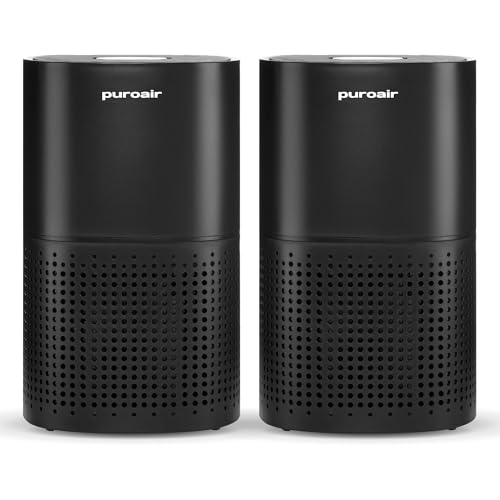 #2
#2
Runner Up
PuroAir 240 HEPA Air Purifiers for Home Large Rooms - Covers Up To 1,000 Sq Ft - Filters Up To 99.9% of Pollutants, Smoke, Pollen, Dust - Quiet HEPA Air Filter - Air Purifiers for Bedroom (2 Pack)
$279.99
Check Price → #3
#3
Best Value
PuroAir 240 HEPA Air Purifier for Home Large Rooms - Covers Up To 1,000 Sq Ft - Filters Up To 99.9% of Pollutants, Smoke, Pollen, Dust - Quiet HEPA Air Filter - Air Purifiers for Bedroom
$159.0
Check Price →Our Top Picks
Affiliate disclosure: if you buy through these links, we may earn a commission at no extra cost to you.
Factors to Consider
1. CADR, room size coverage, and air-change targets
⚡ Quick Answer
In pollen season the pollen CADR rating and the unit’s stated coverage area determine how quickly air in a large home is cleaned. For substantial living spaces (roughly 400–800+ sq ft with typical 8 ft ceilings), look for pollen CADR values in the 350–600 cfm range so the unit can deliver about 4–6 air changes per hour. Always verify the device’s room-size coverage on the box and compare it to your largest active living area to avoid under- or over-provisioning. Budget for filter replacements as part of total cost of ownership: HEPA cores typically run about $20–$80 per replacement, with prefilters and carbon filters adding roughly $5–$40 per change.
Table of Contents
2. Filtration stack: true HEPA efficiency, activated carbon, and pet-specific needs
True HEPA filters (often labeled H13/H14) capture at least 99.95–99.97% of particles at 0.1–0.3 microns, which includes most pollen and pet dander by size. A multilayer filter stack with activated carbon or other gas-phase media helps reduce odors and VOCs from pets and cleaners—beneficial in homes with dogs or cats. Check both coverage and replacement costs: HEPA cores are typically $20–$60, carbon prefilters $15–$60, and overall replacement cycles are commonly 6–12 months depending on use and pet load.
3. Noise, energy efficiency, and long-term operating costs
Large spaces demand higher CADR, but run-time comfort matters; compare decibel ratings across speeds and choose models with quiet operation in daily use. Energy use varies widely (roughly 5–90 watts); estimate annual costs based on wattage and how many hours per day you’ll run the purifier. Ensure the unit’s stated room-size coverage aligns with your largest living zone; for multi-room homes, you may need more than one purifier or a whole-house approach. Plan for replacement costs (HEPA $20–$80, carbon $25–$70, prefilters $5–$30) in your allergy-season budget.
4. Maintenance, safety, and multi-room strategies
Keep performance high with timely filter changes—common guidance is 12–18 months for HEPA cartridges in typical homes, with more frequent changes in pet-heavy environments. Choose models that are ozone-free or have emissions well below 0.05 ppm to protect pets and children. For large homes, consider pairing one or two purifiers in key zones or investing in a whole-house purifier integrated with your HVAC to ensure consistent air quality across rooms.
Frequently Asked Questions
1. How do I size an air purifier for a pollen-prone, large home?
Start with the room’s volume (square footage times ceiling height). Decide on a target air-change rate (4–6 ACH is common for allergy-prone spaces). Then use the CADR_pollen calculation: CADR ≈ (volume × ACH) / 60, and pick a unit whose pollen CADR meets or exceeds that value while matching its listed coverage area.
2. Will HEPA filters remove pet dander and pollen?
Yes. True HEPA filters capture roughly 99.97% of 0.3-micron particles in lab tests, which includes most pollen and many pet-dander particles. For pet-heavy homes, pair a HEPA unit with activated carbon to also address odors and VOCs emitted by pets.
3. How often should I replace filters, and what are typical costs?
Replacement costs vary by media: HEPA cartridges typically run $20–$80, carbon filters $25–$70, and prefilters $5–$30. Replacement cycles are often 6–12 months for carbon and prefilters and 12–18 months for HEPA cartridges in standard use; pet loads and heavy pollen seasons may shorten those intervals.
4. Can one purifier cover multiple rooms or floors?
It depends on the unit’s stated coverage; higher-CADR units may handle large open-plan spaces, but multi-room homes often require multiple purifiers or a whole-house purifier linked to your HVAC. Always verify the product’s “covers up to” spec and plan for additional units if you have distinct living zones.
5. Should I prioritize activated carbon filters for allergy relief in pollen season?
Activated carbon helps with odors and some VOCs common in pet households, but it does not replace particle capture. For pollen relief, emphasize a true HEPA stage with a strong pollen CADR, and add carbon filtration if odor control is also a goal.
6. Are ozone-emitting purifiers safe for homes with pets?
Ozone generators can irritate lungs and mucous membranes, and agencies discourage their use in occupied spaces with pets or children. Choose models certified as ozone-free or with emissions well below 0.05 ppm to minimize risk.
7. What other steps improve indoor air quality beyond an air purifier?
Research supports maintaining indoor humidity around 40–60% to reduce dust mites and mold, which are common allergen sources; combine this with HEPA-filter vacuuming and regular bedding washing for best results. Consider adding a humidifier or dehumidifier as needed and ensure pets are kept out of bedrooms where you sleep.


