

Best Air Purifiers for Everyday Use
🏆 Top Picks at a Glance
 #1
#1
Best Overall
LEVOIT Air Purifiers for Home Large Room Up to 1875 Ft² with Washable Pre-Filter, AHAM VERIFIDE, Air Quality Monitor, HEPA Sleep Mode for Allergies, Pet Hair in Bedroom, Vital 200S-P, White
$159.9
Check Price →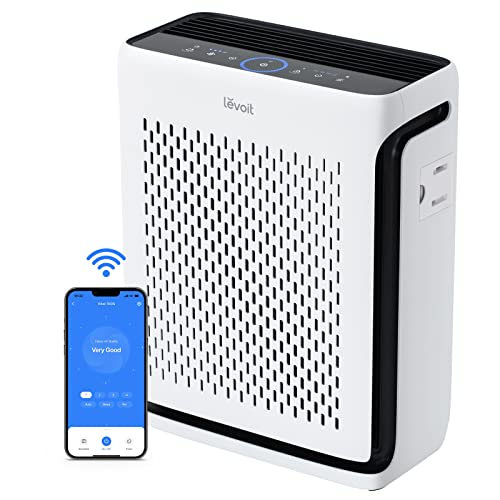 #2
#2
Runner Up
LEVOIT Air Purifier for Home Large Room Up to 1073Ft² with Air Quality Monitor, AHAM VERIFIDE, Smart WiFi, Washable Pre-Filter, HEPA Sleep Mode for Pets, Allergies, Dust, Pollen, Vital 100S-P, White
$113.93
Check Price → #3
#3
Best Value
Shark Air Purifier for Home, NeverChange Compact Pro, for Bedroom, Nursery, Home Office, Dorm, HEPA-Exceeding Filter, Captures Pollutants, Pet Dander, Dust, Odor, Smoke, and More, HP071BRN, Winter Fog
$99.99
Check Price →Our Top Picks
Affiliate disclosure: if you buy through these links, we may earn a commission at no extra cost to you.
Factors to Consider
CADR, room size, and air changes per hour
⚡ Quick Answer
CADR (clean air delivery rate) quantifies how much filtered air a purifier provides per minute and is the primary numeric comparison shoppers use. AHAM-rated CADR allows apples-to-apples comparisons across models and directly relates to how many air changes per hour (ACH) you can expect in a given room. For a typical living room around 150 sq ft with 8 ft ceilings (roughly 1,200 ft³), a CADR of about 100–120 CFM achieves roughly 4–5 ACH, a practical target for reducing PM2.5 quickly. In short, pick a unit whose CADR yields 4–6 ACH in your main living space to balance performance and energy use.
Table of Contents
Filtration efficiency, particle sizes, and true HEPA
Filtration efficiency matters as much as CADR. True HEPA filters capture 99.97% of 0.3 µm particles, and higher-efficiency HEPA variants (H13/H14) excel with submicron particles common in urban pollution and wildfire smoke. Many purifiers pair a HEPA stage with activated carbon to address odors and certain VOCs; this combo broadens the scope of clean air beyond particulates. When evaluating, look for a true HEPA designation rather than “HEPA-like” or “HEPA-type” claims and verify the filter’s actual efficiency rating.
Energy use, noise, and long-term operating costs
Power draw ranges widely among models, typically from 5 to 60 watts, which adds up if you run a purifier 24/7. Noise levels are highly variable; most devices operate quietly on low (around 20–40 dB) but can reach 50–60 dB on high, which matters for bedrooms and offices. Consider not just upfront price but long-term costs, including electricity and the ongoing cost of replacement filters over the device’s life. A unit with a modest wattage and long filter life often delivers the best day-to-day value.
Filter replacement costs and availability
Replacement filter pricing scales with filter type and size. HEPA cartridge replacements commonly run $20–$60 per filter, while activated carbon stages or specialized cartridges can be $15–$50. Some models use sealed cartridge assemblies that cost $50–$200 but may last 12–24 months, depending on use and air quality. Factor filter life and replacement frequency into your total cost of ownership, and check for easy online ordering or local availability.
Smart features, sensors, and maintenance planning
Many purifiers include real-time air quality sensors, auto-mode speed adjustments, and filter-life indicators that help you optimize performance. Some units track VOCs, humidity, or temperature and integrate with apps or smart home ecosystems. A straightforward maintenance plan—check filters every 1–3 months and replace when the indicator signals or performance declines—keeps performance consistent without surprises.
Frequently Asked Questions
How do I choose the right CADR for my room size?
CADR measures how much clean air a purifier delivers per minute and should be matched to your room’s volume. For a room of about 1,200 ft³ (e.g., 150 sq ft with 8 ft ceilings), a CADR of roughly 100–120 CFM yields about 4–5 air changes per hour, which is a practical target for reducing indoor pollutants quickly. In general, aim for a CADR that provides 4–6 ACH in your primary living space to balance performance and energy use.
What is True HEPA, and what particle sizes does it capture?
True HEPA filters meet strict performance standards and capture 99.97% of 0.3 µm particles—the most penetrating size. Higher-efficiency variants (HEPA H13/H14) offer even better performance for submicron particles. When shopping, look for “True HEPA” with a clearly stated efficiency rating rather than generic claims like “HEPA-type.”
Do air purifiers help with allergies or asthma?
Research indicates HEPA-filter purifiers can reduce outdoor and indoor PM2.5 exposure and allergen loads, which is associated with improvements in nasal symptoms and, in some cases, asthma control. While results vary by study and individual, purifiers are a helpful part of a broader allergy-management plan that includes cleaning and reducing known triggers.
How often should I replace filters, and what does it cost?
Filter life depends on usage and environment; many purifiers require filter changes every 6–12 months, with more frequent changes in high-pollution settings. Replacement costs typically range from $20–$60 for HEPA filters and $15–$50 for carbon or combination filters. Consider the total cost of ownership, including filter life, availability, and any subscription or cartridge programs.
Can purifiers remove VOCs and odors?
Activated carbon filters can adsorb many VOCs and odors, but effectiveness depends on carbon weight, surface area, and exposure time. VOC removal is slower than particle filtration and carbon filters saturate over time, reducing performance. For strong odors or high VOC environments, look for a unit with a substantial carbon stage and consider supplementing with better source control and ventilation.
Are ozone generators or ionizers safe?
Ozone-producing devices and some ionizers can generate ozone, which can irritate the lungs, especially in people with asthma or allergies. Avoid models that emit ozone; choose devices labeled “no ozone” or “ozone-free.” If you rely on an ionizer, ensure independent testing confirms minimal ozone emission.
Is it better to run the purifier continuously or only when the room is in use?
Continuous operation generally yields better pollutant control by maintaining lower ambient levels, especially in occupied spaces with high particulate load. If energy costs are a concern, running at a lower setting continuously can still provide meaningful air quality benefits while reducing noise and power use.
Conclusion
For everyday use, prioritize a True HEPA unit with a CADR matched to your room size, plus an adequate carbon stage for odors and VOCs. A practical choice combines reliable filtration, reasonable running costs, and maintenance that you can manage over time. In short: select a model with 4–6 ACH in your main room, plan for filter replacements within 6–12 months, and favor devices with real-time air quality feedback to keep your indoor air clean and healthy.


