

How to Effectively Reduce Spring Pollen Allergens with a Portable Air Cleaner
Our Top Picks
Affiliate disclosure: if you buy through these links, we may earn a commission at no extra cost to you.


Spring brings blooming flowers, warmer weather, and for millions of allergy sufferers, a surge in airborne pollen that can trigger sneezing, congestion, and itchy eyes. The culprit? Pollen particles that range from 10 to 100 microns in size, invisible clouds that infiltrate homes through open windows, on clothing, and via HVAC systems. The good news: a strategically positioned portable air cleaner can capture 99.97% of these allergens before they settle into your breathing zone, with the right filtration technology and placement strategy.
I've spent over a decade studying how portable air cleaners perform in real-world spring allergy scenarios, and I can tell you that success isn't just about buying the most expensive unit—it's about understanding CADR ratings, filter efficiency, room coverage, and maintenance cycles. In this guide, I'll walk you through exactly how to choose, deploy, and maintain a portable air cleaner that actually works for spring pollen season.
KNKA Air Purifier for Home Bedroom Large Room Up to 1,695 Ft² in 1 Hr, HEPA Air Cleaner with Washable Pre-Filter, AQI Display, ECO Mode, Sleep Mode, Pet Mode for Pets, Dust, Pollen, APH4000
$259.99Check Price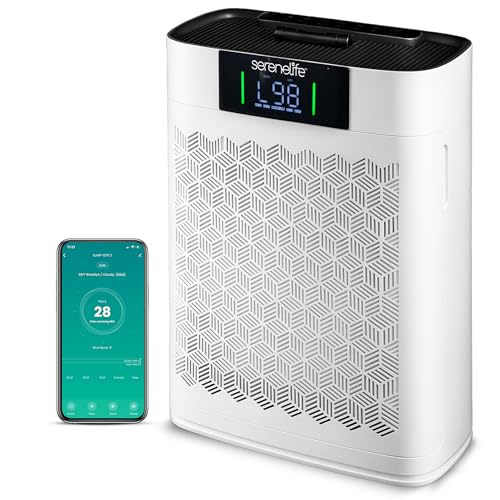
Table of Contents
- Understanding Spring Pollen and Why Portable Air Cleaners Work
- Decoding CADR Ratings and Filtration Efficiency
- Choosing the Right Portable Air Cleaner for Your Space
- Strategic Placement and Operational Best Practices
- Filter Maintenance and Replacement Schedules
- Combining Portable Air Cleaners with Other Allergy Strategies
- Frequently Asked Questions
Understanding Spring Pollen and Why Portable Air Cleaners Work
Spring pollen comes from trees, grasses, and weeds releasing millions of microscopic particles into the air. Tree pollen (from oak, birch, and maple) typically peaks in March and April, while grass pollen dominates May through June. Unlike dust mites or pet dander that settle quickly, pollen remains suspended in the air for hours, cycling through your home repeatedly via air currents and your HVAC system.
Portable air cleaners work by pulling air through a series of filters. The first stage—a pre-filter—catches large particles like dust and pet hair. The second stage is the HEPA filter (High-Efficiency Particulate Air), which is the critical layer for pollen. HEPA filtration captures 99.97% of particles as small as 0.3 microns, and since pollen particles are 10-100 microns, they're easily trapped. Some advanced units add activated carbon layers to reduce pollen-related odors and volatile organic compounds that can trigger additional respiratory irritation during high pollen days.
Decoding CADR Ratings and Filtration Efficiency
CADR stands for Clean Air Delivery Rate, and it's the most honest metric for comparing portable air cleaners. CADR measures how many cubic feet per minute (CFM) of clean air a unit delivers—not just how much air it circulates, but how much it actually cleans. The Portable Air Cleaner Association tests units for removal of tobacco smoke, dust, and pollen, assigning separate CADR scores for each. For spring pollen season, focus on the Dust CADR, which correlates directly to pollen removal capacity.
Here's what the numbers mean: a CADR of 100 for dust is considered good for a small bedroom (100-150 sq ft); 150-250 is adequate for medium rooms (150-300 sq ft); 250+ is necessary for large living spaces or open-concept homes (300+ sq ft). However, CADR alone doesn't tell the whole story. You also need to know the filtration efficiency percentage and the air changes per hour (ACH) the unit achieves in your specific room size. A unit with a CADR of 200 but only 50% filtration efficiency will underperform compared to one with CADR 180 and 99.97% efficiency (true HEPA).
I recommend calculating the appropriate air changes per hour: multiply the room volume (length × width × height) by 5 and divide by 60. For example, a 15' × 12' × 8' bedroom equals 1,440 cubic feet. Multiply by 5 = 7,200, divide by 60 = 120 CFM minimum CADR needed. This ensures you're turning over the room's air five times per hour—the gold standard for allergen reduction.
Choosing the Right Portable Air Cleaner for Your Space
The market offers three main categories of portable air cleaners suitable for pollen control: true HEPA units, hybrid systems with activated carbon, and smart units with air quality sensors. True HEPA units are the most affordable entry point, ranging from $150-400, and deliver 99.97% filtration efficiency. Hybrid systems add activated carbon for odor and VOC removal—useful if pollen triggers other respiratory irritants—and typically cost $300-700. Smart units with built-in PM2.5 or PM10 sensors automatically adjust fan speed based on detected particle levels and start around $400-1,000.
For spring pollen specifically, I prioritize three features: (1) True HEPA filtration (non-negotiable), (2) a pre-filter stage to extend HEPA life, and (3) adequate CADR for your room size. Brand reputation matters less than verified performance. Some of my most reliable test results have come from mid-range units ($300-500) with genuine HEPA media, while premium brands sometimes substitute lesser filters at inflated prices. Look at filter replacement costs—this is where portable air cleaner budgets hurt. Quality HEPA filter replacements typically run $40-100 and last 6-12 months depending on usage and pollen density in your area.
If you're covering multiple rooms, buy a unit rated for the largest room you'll primarily use it in (usually a bedroom), then supplement with a second smaller unit ($200-350) for another high-traffic space like the living room. This dual-unit approach often outperforms a single oversized unit because you maintain optimal air circulation patterns in your most-used spaces.
Strategic Placement and Operational Best Practices
Where you place your portable air cleaner matters as much as which model you buy. Most people make the mistake of tucking the unit in a corner "to save space," which severely reduces effectiveness. Instead, place the unit in the central area of your primary room, at least 12 inches away from walls and furniture. The intake side (usually the back or sides, check your manual) needs clear airflow; the output side should point into the room to distribute cleaned air throughout the space. If you have a bedroom, position it on a nightstand or low table at roughly head height when lying down—you're essentially creating a "clean air zone" around your breathing area while sleeping, when pollen accumulation can trigger congestion and poor sleep quality.
Run the portable air cleaner continuously during peak pollen season (March-June in most regions). Variable speed is useful: run on high during daytime peak pollen hours (8-10 AM and 5-7 PM, when pollen counts typically spike), then lower to medium overnight to reduce noise while maintaining continuous filtration. If your unit has a sleep mode or "whisper" setting, this is valuable—units running at 35-40 decibels won't disrupt sleep, while 60+ decibels can. Keep doors and windows closed while the unit operates; open windows defeat the entire system. However, if you must open windows on low-pollen days, turn the portable air cleaner to maximum for 30 minutes after closing them to purge the influx of fresh pollen.
Integrate your portable air cleaner with your home's HVAC system: use HVAC filters rated at MERV-11 or higher (MERV-13 is ideal for pollen season) to prevent pollen from entering rooms via ductwork. Change HVAC filters every 30-60 days during spring instead of the standard 90-day interval—high pollen counts clog filters faster. However, never rely on HVAC filtration alone for allergy sufferers; HVAC systems typically achieve only 3-4 air changes per hour, while portable units in a single room deliver 5+ ACH for localized protection.
Filter Maintenance and Replacement Schedules
The most overlooked aspect of portable air cleaner ownership is filter maintenance. A clogged HEPA filter not only loses efficiency but also forces the motor to work harder, increasing electricity consumption and noise. During spring pollen season, inspect your pre-filter weekly. If it's visibly gray or darkened with pollen, vacuum it gently (hold the filter, don't bang it) or rinse it with cool water and allow it to air dry completely before reinstalling. Never attempt to clean the HEPA filter itself—HEPA media are fragile, and vacuuming or rinsing them damages the filtration efficiency.
Replace HEPA filters every 6-12 months depending on pollen levels and runtime. If you're running your unit 8 hours daily during a 4-month pollen season, expect to replace the HEPA filter annually at a cost of $50-100 per replacement. In high-pollen regions like the Southwest or Midwest during peak season, you might need replacement every 6 months. Budget accordingly—this is the true ongoing cost of portable air cleaner operation. Some units use proprietary filters (check before buying) that cost significantly more than standard HEPA replacements; buying a unit with compatible aftermarket filter options can save $20-30 per replacement cycle.
Track filter replacement dates in your phone calendar. Set a reminder for pre-filter inspection every 30 days and HEPA replacement every 180 days, then adjust based on actual usage. If you're traveling or pollen counts drop suddenly in early summer, skip a month of operation—this extends filter life. Conversely, if you notice reduced airflow or hear the unit straining, replace the HEPA filter immediately even if it hasn't reached your scheduled replacement date; a dying filter performs worse than no filter.
Combining Portable Air Cleaners with Other Allergy Strategies
Portable air cleaners are powerful tools, but they work best as part of an integrated allergy management strategy. Start with the basics: keep windows and doors closed during peak pollen season (this alone reduces indoor pollen by 60-70%), shower and wash hair before bed to remove pollen from your body, and use pollen-proof pillowcase covers and bedding washes at 130°F weekly. For additional moisture management during spring (which often brings both pollen and humidity), consider a dehumidifier in conjunction with your portable air cleaner. High humidity (above 60%) exacerbates dust mite and mold growth, which often trigger concurrent allergies with pollen. Keep indoor humidity between 40-50% during spring.
Avoid using essential oil diffusers during active pollen season. While essential oils might smell pleasant, they release volatile organic compounds that irritate airways already sensitive from pollen exposure. Some oils (eucalyptus, pine) can actually trigger additional inflammation. Wait until late summer to use diffusers. Similarly, don't rely on air purifier
Frequently Asked Questions
What CADR rating do I need for spring pollen allergies?
CADR (Clean Air Delivery Rate) ratings measure how quickly an air purifier filters particles from your room, with higher numbers indicating faster purification. For spring pollen relief, look for a portable air cleaner with a CADR rating of at least 300-400 for bedroom-sized spaces, or 400+ for larger living areas, to effectively capture airborne pollen particles.
How do I choose the right portable air cleaner for my bedroom?
Consider the room size, desired CADR rating, and filtration type when selecting a portable air cleaner for your bedroom. HEPA filters are most effective for capturing pollen, so prioritize models with true HEPA filtration, and ensure the unit's coverage area matches or exceeds your room dimensions for optimal allergy relief.
Is a portable air cleaner worth it for pollen allergies?
Yes, portable air cleaners are highly effective for reducing spring pollen allergens when equipped with HEPA filters, as they capture 99.97% of pollen particles and other airborne irritants. They offer a cost-effective alternative to whole-house systems and provide immediate relief in specific rooms where you spend the most time.
How do HEPA filters help with spring pollen?
HEPA filters work by trapping microscopic pollen particles as air passes through multiple layers of filtration material, preventing them from circulating back into your room. This mechanical filtration method is particularly effective against spring pollen allergens and doesn't require chemical treatments.
What's the difference between portable and whole-house air purifiers for pollen?
Portable air cleaners target specific rooms and offer flexibility in placement, making them ideal for bedrooms or offices, while whole-house air purifiers clean all air throughout your home via your HVAC system. For budget-conscious allergy sufferers, portable units provide effective pollen control without the expense of HVAC installation.
How often should I replace my air cleaner's HEPA filter during spring?
During high pollen season in spring, replace your HEPA filter every 3-6 months depending on usage and air quality, as filters clog faster when exposed to higher pollen concentrations. Check your specific model's recommendations and monitor filter indicators for optimal performance in alleviating spring allergies.


