

How to Improve Air Quality in Your Home with a HEPA Air Purifier This Summer
Our Top Picks
Affiliate disclosure: if you buy through these links, we may earn a commission at no extra cost to you.

Summer brings sunshine, outdoor time, and unfortunately, a surge in indoor air pollution. Higher temperatures accelerate the release of volatile organic compounds (VOCs) from furniture, paints, and cleaning products. At the same time, open windows invite pollen, mold spores, and outdoor particulates—especially problematic if you live in an area with poor air quality index (AQI) readings. A high-efficiency particulate air (HEPA) filter can remove 99.97% of particles 0.3 micrometers or larger, making it one of the most scientifically validated tools for summer air quality management.
Over my fifteen years studying indoor air quality, I've seen how heat and humidity compound respiratory issues, particularly for people with asthma, allergies, and immunocompromised conditions. The good news? A properly selected HEPA air purifier, paired with strategic placement and maintenance, can measurably improve your home's air in weeks. This guide walks you through everything from understanding CADR ratings to optimizing filter costs and humidification strategies.
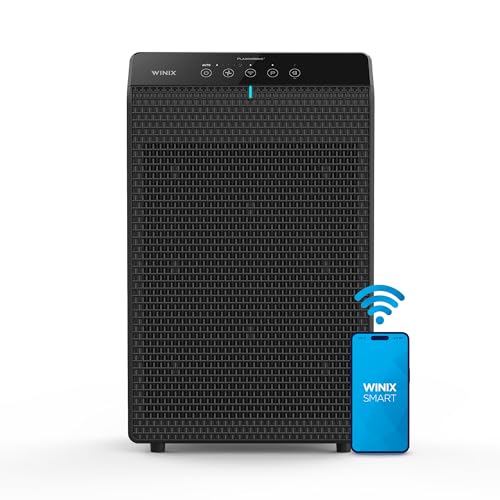
WINIX 5520 Air Purifier for Home Large Room Up to 1882 Ft² in 1 Hr With Air Quality Monitor, True HEPA, High Deodorization Carbon Filter and Auto Mode, Captures Pet Allergies, Smoke, Dust.
$139.99Check Price
Table of Contents
- Understanding HEPA Filters and Their Effectiveness
- Choosing the Right Air Purifier for Your Space
- Proper Placement and Airflow Optimization
- Maintenance and Filter Replacement Schedules
- Combining HEPA Purification with Humidity Control
- Measuring Results with an Air Quality Monitor
- Frequently Asked Questions
Understanding HEPA Filters and Their Effectiveness
A true HEPA filter is a mechanical barrier composed of randomly arranged fiberglass fibers, typically 0.5 to 2 micrometers in diameter. When air passes through, particles are captured through three mechanisms: interception (particles following air streamlines come within one radius of a fiber), impaction (larger particles can't follow air curves and hit fibers), and diffusion (smallest particles are knocked around by gas molecules and eventually trapped). This multi-stage capture is why HEPA filters achieve their remarkable 99.97% efficiency at 0.3 micrometers—the most penetrating particle size (MPPS).
It's critical to distinguish between true HEPA filters and "HEPA-type" or "HEPA-like" filters marketed by budget brands. Only filters certified to meet U.S. Department of Energy (DOE) standards warrant the HEPA label. Check product documentation for third-party certification. In summer conditions with higher humidity (which can actually improve particle capture efficiency), true HEPA filters outperform other technologies like ionizers or electrostatic precipitators, which may generate ozone—a secondary pollutant.
HEPA filters work best as part of a multi-stage system. Pre-filters (usually foam or mesh) capture larger particles and pet hair, extending HEPA life. Activated carbon filters remove VOCs and odors. UV-C light stages (optional) can inactivate mold spores and bacteria. However, if your budget allows only one upgrade, prioritize the HEPA stage—it delivers the most measurable health benefit.
Choosing the Right Air Purifier for Your Space
Room size is the single most important factor in purifier selection, yet it's the most frequently ignored. Manufacturers must publish CADR ratings for smoke, dust, and pollen—measured in cubic feet per minute (CFM). A CADR of 200 for smoke, for example, means the purifier delivers 200 cubic feet of truly clean air per minute. To properly cover a room, the purifier should exchange the entire room's air at least 4 to 5 times per hour (ACH). For a 400 square-foot bedroom with 8-foot ceilings (3,200 cubic feet), you'd need a CADR of at least 213 CFM (3,200 ÷ 15 minutes).
During summer, when you're managing both pollen and heat-triggered indoor pollution, opt for a CADR rating at the higher end of the range. An air purifier with a CADR of 300+ is ideal for living rooms and master bedrooms, while a CADR of 150-200 suffices for bedrooms under 250 square feet. Portable cleaners excel in isolated spaces—a home office or child's room—while whole-house systems (integrated into your HVAC) are superior for comprehensive coverage but require professional installation and higher upfront costs ($1,500-$4,000 including labor).
Noise level matters, especially in bedrooms. Look for units operating below 50 dB on lower fan speeds (equivalent to normal conversation). Some brands, like Blueair and Coway, balance performance with quieter operation. During summer heat waves, you may run your purifier 24/7, so a noisy unit becomes exhausting. Also verify replacement filter costs upfront—some purifiers have premium filters that cost $150-$300 annually, which significantly impacts long-term affordability.
Proper Placement and Airflow Optimization
Even the best HEPA purifier performs poorly if positioned incorrectly. Place your unit in the room's central area, away from walls and corners where air circulation stagnates. Avoid placing it directly behind furniture or in closets—the air inlet needs unobstructed access. In a bedroom, a nightstand or dresser at the foot of the bed works well; in a living room, a corner away from the sofa is ideal. The goal is creating a circulation pattern where contaminated air enters the purifier and cleaned air disperses throughout the room.
Summer-specific placement consideration: if your home has strong sunlight, avoid placing purifiers in direct sun exposure, as heat can degrade internal components and reduce operational efficiency. Similarly, keep units away from air conditioning vents—the cold draft doesn't harm the purifier but can interfere with natural air circulation patterns you're trying to establish. Height also matters; most people place units on the floor, but elevated placement (table or shelf height) can improve intake if you're dealing with floor-level dust or pet dander.
In homes with multiple rooms, a single portable purifier won't solve air quality comprehensively. Instead, deploy units strategically: one in the primary bedroom (where you spend 7-9 hours nightly), one in main living areas, and consider a portable unit for home offices. If upgrading your HVAC system, ask your technician about whole-house HEPA filtration—MERV 13 or higher HVAC filters combined with your system's existing air handler provide excellent coverage, though they require quarterly or semi-annual replacement and generate higher energy costs due to increased resistance.
Maintenance and Filter Replacement Schedules
A HEPA filter's lifespan depends on your home's baseline air quality and usage patterns. In low-pollution areas with light use (8 hours daily), expect 12-18 months. In homes with pets, smokers, or dusty environments, or if running 24/7 during summer, filters may last only 3-6 months. Pre-filters extend HEPA life significantly—replace pre-filters every 3-4 months before they clog entirely. Clogged pre-filters increase backpressure, forcing the motor to work harder and reducing the HEPA filter's effectiveness.
Check filters visually monthly. If a pre-filter appears gray or brown, replacement is overdue. HEPA filters don't change color noticeably, but if your purifier's fan speed is higher than usual to maintain suction, the HEPA is likely clogged. Never attempt to vacuum or wash true HEPA filters—the fiberglass structure is fragile and permanent damage occurs easily. Some "washable HEPA-type" filters exist but don't meet true HEPA standards and lose efficiency rapidly. Budget $80-$300 annually for replacement filters depending on your unit's quality and local air pollution levels.
Activated carbon filters (if your model includes them) require replacement every 3-6 months, as they absorb VOCs but don't filter indefinitely. Summer heat accelerates carbon saturation, so plan for more frequent replacement during June through September if dealing with strong odors or cooking fumes. Set calendar reminders for filter checks—neglecting this is the #1 reason people report "my purifier stopped working." It didn't; the filter just maxed out.
Combining HEPA Purification with Humidity Control
Summer's high humidity creates an often-overlooked air quality problem: mold and dust mite proliferation. While HEPA filters capture mold spores, they don't prevent moisture that fuels mold growth. Humidity above 55-60% accelerates mold colonization and dust mite reproduction. Conversely, humidity below 30% irritates airways and dries mucous membranes, increasing respiratory infection risk. The ideal summer range is 40-50% relative humidity (RH).
If your home naturally reaches 60%+ RH during humid summer months, a dehumidifier becomes a complementary tool to your HEPA purifier. Portable dehumidifiers (remove 20-70 pints of water daily) work in isolated rooms; whole-home units integrate with HVAC systems. Run your dehumidifier on the basement level or in the most humid rooms—kitchens and bathrooms create moisture spikes. Position it centrally, away from walls and furniture, and ensure intake and outlet vents are unobstructed. Empty collection tanks daily or connect to a continuous drain line.
Conversely, in very dry climates or winter conditions (some homes turn arid in summer air conditioning), a humidifier prevents the drying that compromises your respiratory system's natural defense mechanisms. Ultrasonic humidifiers are quieter than evaporative models but can disperse mineral dust if using hard water—always use distilled water. Maintain humidifiers scrupulously; mold and bacteria grow in standing water, negating the health benefits. Clean tanks every 2-3 days and replace filters regularly.
Measuring Results with an Air Quality Monitor
You cannot optimize what you don't measure. An air quality monitor displaying PM2.5 (particles 2.5 micrometers and smaller), PM10 (particles 10 micrometers and smaller), temperature, and humidity transforms purifier management from
Frequently Asked Questions
How do HEPA filters work to improve home air quality?
HEPA filters use a dense mat of randomly arranged fibers to trap particles as small as 0.3 microns, including dust, pollen, pet dander, and mold spores. When air passes through the filter, these microscopic particles are caught and trapped, preventing them from recirculating into your home. This makes HEPA filters highly effective for allergy relief and reducing indoor air pollution, especially during summer months when VOCs are released from furniture and building materials.
How do I choose the right air purifier for my home size?
Consider the square footage of the room and look for the air purifier's Clean Air Delivery Rate (CADR) rating, which indicates how quickly it filters air. For optimal results, choose a unit that can handle your room size and runs through the air multiple times per hour—typically 3-5 times is recommended. Portable air cleaners work well for individual rooms, while whole house air purifiers are better for larger homes or those wanting comprehensive coverage.
Where should I place my air purifier for maximum effectiveness?
Position your portable air purifier in the room's center or near the source of pollutants, away from walls and furniture that can block airflow. Ensure there's at least 12 inches of clearance around the unit to optimize air circulation. Avoid placing it in corners or against windows, as this restricts the purifier's ability to draw in contaminated air and distribute clean air throughout your space.
Is it worth buying an air quality monitor to use with my air purifier?
Yes, air quality monitors provide real-time data on pollutant levels and help you understand if your purifier is effectively improving your indoor environment. They track PM2.5, VOCs, and other harmful particles, allowing you to adjust settings or placement accordingly. This data is particularly valuable during summer when elevated temperatures increase indoor pollution from furniture off-gassing and other sources.
What's the best way to maintain HEPA filters for optimal performance?
Check your filter monthly and replace it according to the manufacturer's recommendations, typically every 6-12 months depending on usage and air quality. Pre-filters should be vacuumed regularly to extend the life of the main HEPA filter and maintain airflow efficiency. Never wash or reuse HEPA filters, as moisture and agitation damage the fibers and reduce their effectiveness at trapping particles.
How can I reduce VOCs in my home during summer along with using an air purifier?
Use your HEPA air purifier as your first line of defense, but also increase ventilation by opening windows during cooler morning and evening hours. Reduce sources of VOCs by choosing low-VOC paints and furniture, and consider supplementing your air purifier with an essential oil diffuser using natural oils rather than chemical air fresheners. For optimal results, combine your air purifier with humidity control using dehumidifiers or humidifiers, as maintaining 30-50% humidity levels reduces dust mites and mold growth.
Should I use a portable air cleaner or a whole house air purifier system?
Portable air cleaners are ideal if you want to target specific rooms or have budget constraints, offering flexibility and immediate results. Whole house air purifiers integrated with your HVAC system provide comprehensive coverage throughout your entire home and require less frequent filter changes. Choose based on your home size, budget, and whether you need targeted purification in specific areas like bedrooms or concentrated pollution zones.


