

How to Prepare Your Home for the Fourth of July with the Best Air Purifiers
Our Top Picks
Affiliate disclosure: if you buy through these links, we may earn a commission at no extra cost to you.

The Fourth of July brings fireworks, grills, and gatherings—but it also brings a significant spike in indoor air pollution. Firework particulate matter, charcoal smoke, and volatile organic compounds (VOCs) from celebratory activities can degrade your home's air quality in minutes. If you or your family members have asthma, allergies, or cardiovascular sensitivities, this holiday weekend can trigger symptoms within hours of exposure. I've spent over a decade studying how outdoor pollution infiltrates indoor spaces, and the data is clear: most American homes lack the filtration infrastructure to handle the particulate load generated during holiday celebrations.
The good news? With the right air purification strategy—combining HEPA filters, activated carbon, and properly sized units—you can maintain healthy indoor air quality throughout the festivities. This guide walks you through selecting, positioning, and operating air purifiers to defend your home against Fourth of July air pollution, plus complementary strategies using humidity control and air quality monitoring to ensure your guests breathe clean air.
GermGuardian HEPA Air Purifier for Home, Large Rooms - 743 Sq. Ft. with HEPA Air Filter, UV-C Light & Odor Reduction, AC4825E, 22" Tower, Gray
$79.0Check Price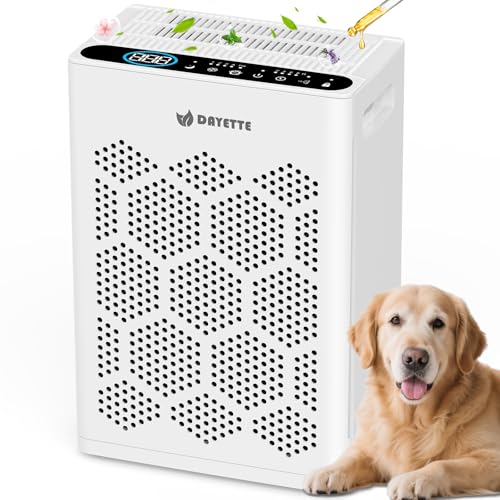
Table of Contents
- Understanding Fourth of July Air Pollution
- Choosing the Right Air Purifier for Your Home
- Strategic Placement and Setup Before the Holiday
- HEPA Filters vs. Activated Carbon: What You Really Need
- Humidity Control During Celebrations
- Real-Time Monitoring: Using Air Quality Meters
- Frequently Asked Questions
Understanding Fourth of July Air Pollution
Fireworks release a complex mixture of pollutants that differ significantly from typical household air contaminants. When a firework detonates, it expels particulate matter (PM2.5 and PM10), heavy metals including copper and aluminum, and gases like sulfur dioxide and nitrogen oxides. The problem compounds when multiple fireworks ignite in close succession—studies show neighborhood PM2.5 levels can spike to 300-500 µg/m³ during peak fireworks hours, compared to the EPA's healthy standard of 35 µg/m³ over 24 hours. Grilling adds another layer: propane combustion and charred meat release additional particulate matter and aromatic hydrocarbons that settle into fabrics and circulate through your HVAC system.
The challenge is that outdoor pollution doesn't stay outside. Even with windows closed, air naturally infiltrates your home through door gaps, window seals, and especially through your HVAC return vents—the system that pulls air back into your furnace or air handler. If you run your central air conditioning during a celebration, you're actively pulling contaminated outdoor air through your standard HVAC filter (typically a 1-inch filter rated MERV 8 or lower), which stops roughly 30% of particles smaller than 5 microns. The rest circulate throughout every room. This is why portable HEPA units and whole-house upgrades matter.
Choosing the Right Air Purifier for Your Home
The first rule of air purifier selection is matching CADR (Clean Air Delivery Rate) to your room size. CADR measures how many cubic feet per minute (CFM) of clean air a unit delivers—separately for smoke, dust, and pollen. For Fourth of July preparation, focus on the smoke CADR, since firework particulate behaves similarly to cigarette smoke. The general formula: select a unit with a smoke CADR of at least one-third your room's volume in CFM. For a 300-square-foot living room with 8-foot ceilings (2,400 cubic feet), you need a minimum smoke CADR of 80 CFM. If you're planning to gather 15+ people indoors, bump that up to CADR 100+.
For a typical 2,000 square-foot home, you have three strategic options: one large whole-house unit integrated into your HVAC system (costs $1,500-3,500 plus installation), three portable units covering main living areas (costs $600-1,500 total), or a combination approach. Most homeowners find the three-unit strategy most effective for the Fourth of July, deploying units in the living room, kitchen, and master bedroom. Look for units that explicitly use true HEPA filtration (captures 99.97% of particles ≥0.3 microns) combined with activated carbon for odor and gas absorption. Brands like Coway, Blueair, and IQAir consistently deliver CADR ratings that match their claims, verified by AHAM (Association of Home Appliance Manufacturers).
Strategic Placement and Setup Before the Holiday
Air purifier placement determines how effectively it cleans your space. The optimal position is in the highest-traffic room where guests gather, typically 3-6 feet away from walls and furniture that could block air intake. If you're running a portable unit, place it in the center of your living room or dining area—not in a corner, where air circulation stagnates. The unit draws contaminated air from its intake (usually on the back or sides) and expels clean air from the top or front. Position it so clean air flows toward where people sit, not toward a wall.
For multi-room protection during a gathering, use the bedroom door strategy: run one unit in your master bedroom for 15-20 minutes before guests arrive, then close the door. This creates a "clean room" where sensitive family members can retreat if symptoms develop. Meanwhile, run your main units in common areas continuously during the event. Set units to their highest fan speed during active fireworks times (typically 8 PM–11 PM on July 4th) and return to medium speed otherwise to reduce noise during conversation. Pre-run your units for at least 30 minutes before the first guest arrives to establish a baseline of clean air. Plan filter replacements: if you run units continuously for 12+ hours during July 3rd and 4th, you'll reduce filter lifespan by 20-30%. Have a replacement filter ready ($40-80 per filter depending on the unit).
HEPA Filters vs. Activated Carbon: What You Really Need
A true HEPA filter removes particulate matter—the smoke, dust, and heavy metal particles from fireworks. A typical HEPA filter stops 99.97% of particles 0.3 microns and larger, which captures the majority of firework PM2.5. However, HEPA alone doesn't address gases or odors. Activated carbon (or activated charcoal) absorbs volatile organic compounds (VOCs), ozone, and odor molecules. For Fourth of July, this two-stage approach is critical because fireworks release both particulate and gaseous pollutants. A unit with only HEPA filtration will reduce smoke-related coughing but not the acrid chemical smell that penetrates fabrics and lingers for days.
The best portable units combine HEPA and activated carbon in a single filter cartridge or as separate stages. Whole-house HVAC upgrades should include both layers as well. When budgeting for filter replacement costs, factor in both: a premium HEPA + carbon filter typically costs $60-120 and should be replaced every 6-12 months under normal use, or every 3-4 months if you run the unit heavily (8+ hours daily). For July 4th preparation, I recommend replacing filters immediately before the holiday weekend, not after—you want maximum filtration capacity when pollution peaks. If your unit is 18+ months old and the filter hasn't been replaced, replace it now. Clogged filters reduce airflow and CADR effectiveness by up to 50%, making a "old but functional" filter nearly useless during high-pollution events.
Humidity Control During Celebrations
Relative humidity impacts both air purifier efficiency and guest comfort during July 4th gatherings. Particles behave differently at different humidity levels: at very low humidity (below 30%), static electricity charges particles, causing them to cling to surfaces instead of being drawn into your air purifier's intake. At very high humidity (above 60%), particles aggregate and settle faster, but they also promote mold growth in filters and ducting. The optimal range for air purifier performance and respiratory health is 40-55% relative humidity. On July 4th, especially in humid climates, your home may naturally reach 65-75% RH with 15+ people indoors, increasing activity and moisture from grilling and drinks.
This is where a dehumidifier becomes a supporting tool. You don't need a whole-house model; a portable dehumidifier (30-50 pint capacity) in your main gathering space, set to 50% RH, reduces the air purifier's workload and prevents filter moisture degradation. Run it in the background—it's quieter than an air purifier on high speed. If your climate is arid (Southwest, Mountain West), you may need a humidifier instead to avoid dipping below 30% RH, which can irritate airways. Use an inexpensive hygrometer (digital humidity meter, $15-30) to monitor your home's humidity during the event. Position it in your main gathering area, away from kitchens and bathrooms, for an accurate reading. If humidity exceeds 60%, turn on the dehumidifier; if it drops below 30%, add a small humidifier. Most people don't think about humidity when planning air quality, but it's a multiplier effect—air purifiers work 20-30% more efficiently in the 40-55% range.
Real-Time Monitoring: Using Air Quality Meters
The final piece of Fourth of July air quality management is real-time visibility. An air quality monitor (PM2.5 sensor, also called an air quality meter or air quality monitor) shows you exactly when pollution spikes and how effectively your purifiers are working. Unlike relying on smell or visibility, a digital monitor displays PM2.5 levels in real time (typically updated every 1-10 seconds). This is crucial for decision-making: if your monitor shows PM2.5 climbing to 150+ µg/m³ during fireworks, you can respond by switching purifiers to high speed, closing windows, or moving sensitive
Frequently Asked Questions
How do I choose the right air purifier for Fourth of July smoke?
Look for air purifiers with HEPA filters, which can capture 99.97% of firework particulate matter and smoke particles as small as 0.3 microns. Portable air cleaners are ideal for quickly addressing smoke in specific rooms, while whole house air purifiers provide comprehensive coverage throughout your home.
What is the best air purifier for removing firework smoke and VOCs?
The best air purifiers for Fourth of July celebrations combine HEPA filtration with activated carbon filters to remove both particulate matter and volatile organic compounds from grill smoke and fireworks. Portable units with high CADR ratings (Clean Air Delivery Rate) are effective for quick smoke removal during holiday gatherings.
Where should I place my air purifier before Fourth of July guests arrive?
Position your portable air cleaners in high-traffic areas and rooms where guests gather, typically 3-6 feet away from walls for optimal air circulation. For whole house air purifiers, ensure HVAC filters are clean and properly installed before the holiday to maximize efficiency throughout your home.
Is an air quality monitor worth getting before July 4th?
Yes, an air quality monitor helps you track particulate matter and VOC levels in real-time, allowing you to adjust your air purifier settings and know when indoor pollution peaks during fireworks. This data-driven approach ensures your home maintains healthy air quality during the celebration.
How can I reduce indoor air pollution from July 4th fireworks and grilling?
Use HEPA-filtered air purifiers and keep HVAC filters fresh before the holiday, ensure proper ventilation when grilling outdoors, and consider using essential oil diffusers afterward to refresh your home. Running portable air cleaners continuously during celebrations significantly reduces smoke and particulate matter accumulation.
Do I need a humidifier or dehumidifier with my air purifier for July 4th?
A humidifier can help alleviate respiratory irritation from smoke exposure, while a dehumidifier prevents moisture from trapping smoke particles and pollutants in your home. Choose based on your local humidity levels and whether guests or family members have allergy relief needs.
🛒 Relevant Products for This Topic
Affiliate disclosure: if you buy through these links, we may earn a commission at no extra cost to you.
GermGuardian HEPA Air Purifier for Home, Large Rooms - 743 Sq. Ft. with HEPA...
$79.0
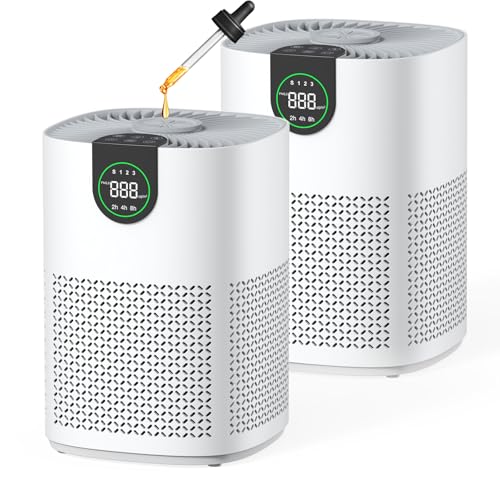
View Product Details →VEWIOR 2 Pack Air Purifiers for Home, Air Purifiers for Bedroom Large Room...
$69.97
View Product Details →DAYETTE Air Purifiers for Home Large Room Up to 2400 Ft² with HEPA 14...
$69.98
View Product Details →

