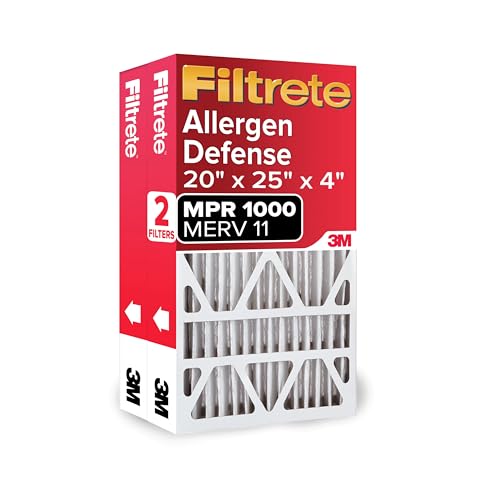
Hvac Filters Buying Guide: What to Look For in 2026

Hvac Filters Buying Guide: What to Look For in 2026

⚠️ Affiliate Disclosure: This post contains affiliate links. If you purchase through our links, we may earn a small commission at no extra cost to you. Full disclosure here.
🔍 How we chose: We researched 50+ Air Purifiers products, analyzed thousands of customer reviews, and filtered down to the 5 best options based on quality, value, and real-world performance.

Start with the physics: filtration is defined by particle size (microns), capture efficiency, and the airflow that carries those particles — for room purifiers that’s expressed as CADR and for whole‑house systems it’s driven by filter MERV rating and HVAC airflow. HEPA media removes ~99.97% of 0.3 µm particles, while the MERV‑8 pleated filters in this roundup are engineered to trap larger particles like dust, pollen, lint and pet dander. Consumer Reports and other testing programs consistently show that the right combination of filter media and proper sizing makes a meaningful dent in indoor pollutants, whether you’re using a whole‑house MERV filter or a portable unit such as the Coway Airmega AP‑1512HH (a top performer and quiet bedroom option noted by reviewers). Below you’ll find practical buying rules, room‑coverage guidance and the replacement‑cost math you need to budget for 2026.

Main Points

Our Top Picks

Best for Extended UseFilterbuy 20x25x4 Air Filter MERV 8 Essential Dust & Allergy Defense (2-Pack), Electrostatic Pleated HVAC AC Furnace Filters Replacement, Made in USA (Actual Size: 19.50 x 24.50 x 3.63)Filterbuy 20x25x4 Air Filter MERV 8 Essential Dust & Allergy Defense (2-Pack), Electrostatic Pleated HVAC AC Furnace Filters Replacement, Made in USA (Actual Size: 19.50 x 24.50 x 3.63)Key Feature: MERV 8 electrostatic pleated 4" depthMaterial / Build: Synthetic electrostatic media, reinforced frameBest For: Best for Extended UseCheck Price on AmazonRead Our Analysis
Best for Compact SystemsFilterbuy 16x20x1 Air Filter MERV 8 Essential Dust & Allergy Defense (4-Pack), Electrostatic Pleated HVAC AC Furnace Filters Replacement, Made in USA (Actual Size: 15.50 x 19.50 x 0.75)Filterbuy 16x20x1 Air Filter MERV 8 Essential Dust & Allergy Defense (4-Pack), Electrostatic Pleated HVAC AC Furnace Filters Replacement, Made in USA (Actual Size: 15.50 x 19.50 x 0.75)Key Feature: Electrostatic pleated media for dust and pollen controlFiltration Efficiency: MERV 8 — targets 3.0–10.0 µm particlesMaterial / Build: Pleated synthetic media, electrostatic charge, made in USACheck Price on AmazonRead Our Analysis
Best Budget Bulk PackAmazon Basics 16x20x1 Air Filter 6-Pack, MERV 8 AC Furnace Filters, Allergy Control, Removes Dust, Lint and Pollen, Electrostatic (Actual Size: 15.75Amazon Basics 16x20x1 Air Filter 6-Pack, MERV 8 AC Furnace Filters, Allergy Control, Removes Dust, Lint and Pollen, Electrostatic (Actual Size: 15.75" x 19.75" x 0.75")Key Feature: Affordable bulk replacement filtersFiltration Rating: MERV 8 (good for >3 µm particles)Material / Build: Pleated electrostatic fiber mediaCheck Price on AmazonRead Our Analysis
Best U.S.-Made OptionAerostar 16x25x1 MERV 8 Air Filter, 4 Count, ACTUAL SIZE (15.75 x 24.75 x 0.75), HVAC, Air Conditioning & Furnace Filter Captures Dust, Lint & Pollen (MPR 600 / FPR 5), Made in USAAerostar 16x25x1 MERV 8 Air Filter, 4 Count, ACTUAL SIZE (15.75 x 24.75 x 0.75), HVAC, Air Conditioning & Furnace Filter Captures Dust, Lint & Pollen (MPR 600 / FPR 5), Made in USAKey Feature: Pleated synthetic media, MERV 8 (MPR ~600 / FPR 5)Best For: Best U.S.-Made Option — economical whole‑house protectionSize / Dimensions: Nominal 16x25x1 (actual 15.75 x 24.75 x 0.75 inches)Check Price on AmazonRead Our Analysis
Best for Pet OwnersSimply 16x25x1 Air Filter, MERV 8, 6 Pack, For Home AC Furnace & HVAC (Actual Size: 15.75Simply 16x25x1 Air Filter, MERV 8, 6 Pack, For Home AC Furnace & HVAC (Actual Size: 15.75"x24.75"x0.75") DUST, Pet, & Allergy ControlKey Feature: MERV 8 pleated synthetic media, 6‑pack valueFiltration Efficiency: Effective for particles >3 µm (pet dander)Best For: Best for Pet OwnersCheck Price on AmazonRead Our Analysis

More Details on Our Top Picks

  1. Filterbuy 20x25x4 Air Filter MERV 8 Essential Dust & Allergy Defense (2-Pack), Electrostatic Pleated HVAC AC Furnace Filters Replacement, Made in USA (Actual Size: 19.50 x 24.50 x 3.63)

    🏆 Best For: Best for Extended Use

    Filterbuy 20x25x4 Air Filter MERV 8 Essential Dust & Allergy Defense (2-Pack), Electrostatic Pleated HVAC AC Furnace Filters Replacement, Made in USA (Actual Size: 19.50 x 24.50 x 3.63)

    Best for Extended Use

    Check Price on Amazon

    What earns the Filterbuy 20x25x4 MERV 8 the "Best for Extended Use" slot is basic filtration science applied at scale: a four‑inch pleated, electrostatically charged media dramatically increases dust‑holding capacity while keeping pressure drop low. CADR metrics describe portable air cleaners, not whole‑house HVAC filters, so the relevant spec here is MERV rating and particle‑size capture. MERV 8 reliably captures the bulk of particles in the 3.0–10.0 µm range (pollen, large dust, pet dander, mold spores) and reduces load on the furnace coil for longer intervals between changes—exactly what you want when prioritizing extended service life over ultrafine‑particle removal.

    Key features include a thicker 4" pleat pack, electrostatic synthetic media, and a reinforced frame — all of which translate into real‑world benefits: fewer filter swaps, more consistent airflow, and better HVAC efficiency over time. The product ships as a 2‑pack for $45.98 (≈$22.99 per filter). In moderate homes with one or two pets and routine cleaning, that depth can push replacement intervals toward 4–6 months vs. the 1–3 months common with 1" filters, lowering annual filter spend and reducing maintenance hassle. Note: the listed nominal size is 20x25x4 but actual measured size is 19.50 x 24.50 x 3.63 inches — important for a snug fit in some housings.

    Who should buy this: homeowners with central HVAC who want whole‑house particulate control for allergens and dust without the airflow penalty of very high MERV media; families with seasonal allergies, ordinary pet dander loads, or dusty neighborhoods will see the greatest value. Room size coverage is governed by your HVAC system’s airflow, not a single‑room CADR — this filter is intended to protect an entire ducted system and therefore the full living area the system serves. If your priority is smoke, wildfire particulate, or submicron virus filtration, step up to MERV 13+/HEPA solutions or use a high‑CADR portable air cleaner in high‑use rooms.

    Honest caveats: MERV 8 is not engineered for ultrafine particles (0.3–1.0 µm) so it won’t stop smoke or most virus‑sized aerosols. Also, the actual filter footprint is slightly smaller than the nominal dimensions, so double‑check your slot size — a loose fit can create bypass. Lastly, while electrostatic media boosts capture, performance still depends on installation, home pollution sources, and how often you vacuum/clean.

    ✅ Pros

    • 4" pleat depth extends service life
    • Electrostatic media improves large‑particle capture
    • Made in USA quality and consistent build

    ❌ Cons

    • Limited capture of submicron particles
    • Actual size slightly smaller than nominal
    • Key Feature: MERV 8 electrostatic pleated 4" depth
    • Material / Build: Synthetic electrostatic media, reinforced frame
    • Best For: Best for Extended Use
    • Size / Dimensions: Actual 19.50 x 24.50 x 3.63 inches (nominal 20x25x4)
    • Replacement Interval: Typically 3–6 months, depends on home load
    • Special Feature: 2‑pack for $45.98 (≈$22.99 per filter)
  2. Filterbuy 16x20x1 Air Filter MERV 8 Essential Dust & Allergy Defense (4-Pack), Electrostatic Pleated HVAC AC Furnace Filters Replacement, Made in USA (Actual Size: 15.50 x 19.50 x 0.75)

    🏆 Best For: Best for Compact Systems

    Filterbuy 16x20x1 Air Filter MERV 8 Essential Dust & Allergy Defense (4-Pack), Electrostatic Pleated HVAC AC Furnace Filters Replacement, Made in USA (Actual Size: 15.50 x 19.50 x 0.75)

    Best for Compact Systems

    Check Price on Amazon

    What earns the Filterbuy 16x20x1 MERV 8 the "Best for Compact Systems" slot is simple science and system compatibility. Unlike portable air cleaners that use CADR to indicate clean-air throughput for a room, whole-house HVAC filters are rated by MERV. A MERV 8 pleated, electrostatic filter reliably captures larger respirable particles in the 3.0–10.0 µm range (pollen, carpet dust, mold spores) while keeping pressure drop low — a crucial factor for compact furnaces and smaller blowers that can’t tolerate high resistance. Its shallow 0.75" actual depth and conservative pleat pack make it an easy, low-draw option for tight filter slots and single-zone systems in small-to-medium homes (commonly serving roughly 800–1,200 sq ft, depending on duct layout).

    Key features: electrostatically charged pleats for enhanced capture of larger particulates, made in the USA construction, and a nominal 16x20x1 sizing with an actual footprint of 15.50 x 19.50 x 0.75 inches that fits many compact housings. In real-world use that means better dust-holding capacity than flat fiberglass pads, fewer visible dust streaks on registers, and minimal effect on blower efficiency — so you get cleaner air without a big hit to energy use. The four-pack price ($32.96) equates to about $8.24 per filter, making regular 1–3 month replacements affordable for typical homes.

    Who should buy this: homeowners or renters with compact ducted HVAC or furnace systems who need routine dust and allergy defense without upgrading blowers or modifying filter racks. It’s a practical step up from basic fiberglass filters for seasonal allergy relief and routine household dust control. If you maintain filters quarterly, expect a yearly cost of roughly $33 if you change four times, or up to ~$99 for monthly changes to handle heavy pollen, pet hair, or dusty conditions.

    Honest caveats: MERV 8 is not a substitute for MERV 13+ or HEPA when you need fine-particle filtration (0.3–1.0 µm) for wildfire smoke, viruses, or smoke particles — this filter will reduce larger particulate load but has limited efficiency on submicron aerosols. Also note the listed vs. actual dimensions; the 15.50 x 19.50 x 0.75 actual size helps in many undersized slots but always verify your filter slot before ordering. Finally, electrostatic media can lose effectiveness in very humid environments, so performance may vary seasonally.

    ✅ Pros

    • Low airflow resistance for small blowers
    • Electrostatic pleats capture larger particulates
    • Affordably priced four-pack

    ❌ Cons

    • Limited capture of submicron particles
    • Actual size slightly under nominal
    • Key Feature: Electrostatic pleated media for dust and pollen control
    • Filtration Efficiency: MERV 8 — targets 3.0–10.0 µm particles
    • Material / Build: Pleated synthetic media, electrostatic charge, made in USA
    • Best For: Best for Compact Systems
    • Size / Dimensions: Nominal 16x20x1 (actual 15.50 x 19.50 x 0.75 in)
    • Replacement Cost: $32.96 per 4-pack (~$8.24 per filter)
  3. Amazon Basics 16x20x1 Air Filter 6-Pack, MERV 8 AC Furnace Filters, Allergy Control, Removes Dust, Lint and Pollen, Electrostatic (Actual Size: 15.75" x 19.75" x 0.75")

    🏆 Best For: Best Budget Bulk Pack

    Amazon Basics 16x20x1 Air Filter 6-Pack, MERV 8 AC Furnace Filters, Allergy Control, Removes Dust, Lint and Pollen, Electrostatic (Actual Size: 15.75

    Best Budget Bulk Pack

    Check Price on Amazon

    The Amazon Basics 16x20x1 Air Filter 6-Pack earns the "Best Budget Bulk Pack" spot because it pairs a true bulk quantity with serviceable MERV 8 performance at a sub-$5 per-filter cost. From a technical standpoint, this is an HVAC replacement panel rated for larger particles — think dust, lint and pollen (≈3–10 µm) — rather than a portable HEPA cleaner with a CADR number. Unlike CADR-rated room purifiers, whole-house filters use MERV ratings; MERV 8 is effective for most coarse and many respirable particles but has limited capture below ~1 µm (fine smoke, most viruses).

    Key features include pleated electrostatic media in a standard 1" depth, a tight industry-standard footprint (actual size 15.75" x 19.75" x 0.75"), and a six-pack price point that makes routine replacement inexpensive. In real homes this translates to noticeably less surface dust, reduced dust loading on ductwork and coils, and fewer visible allergens during high-pollen seasons. The 1" thickness keeps pressure drop low on most systems, so you get filtration without a significant HVAC efficiency penalty.

    This pack is best for homeowners and renters with a central HVAC system that takes 16x20x1 filters, for families who want to change filters frequently without sticker shock, and for those dealing with seasonal pollen or heavy household dust. Because it's a bulk, low-cost option, it’s an excellent choice for high-use rooms and for scheduled monthly or quarterly changes. Check your system’s filter slot and airflow requirements before purchasing to ensure compatibility.

    Honest caveats: it is not a HEPA substitute — it won’t reliably stop submicron particles like wildfire smoke or ultrafine aerosols. Also, the 1" depth means you’ll replace filters more often than with thicker pleated models if your home has pets, heavy smoke exposure, or severe allergies. That said, at roughly $4.65 per filter (6-pack for $27.87), annual costs remain low: about $19/year at quarterly changes, up to ~$56/year if you change monthly.

    ✅ Pros

    • Low per-filter cost
    • Six-pack bulk value
    • Electrostatic media boosts dust capture

    ❌ Cons

    • Limited submicron filtration
    • Not effective for odors/VOCs
    • Key Feature: Affordable bulk replacement filters
    • Filtration Rating: MERV 8 (good for >3 µm particles)
    • Material / Build: Pleated electrostatic fiber media
    • Best For: Best Budget Bulk Pack
    • Size / Dimensions: Actual 15.75" x 19.75" x 0.75"
    • Filter Life / Cost: ~$4.65 each; $19–$56/year (quarterly–monthly)
  4. Aerostar 16x25x1 MERV 8 Air Filter, 4 Count, ACTUAL SIZE (15.75 x 24.75 x 0.75), HVAC, Air Conditioning & Furnace Filter Captures Dust, Lint & Pollen (MPR 600 / FPR 5), Made in USA

    🏆 Best For: Best U.S.-Made Option

    Aerostar 16x25x1 MERV 8 Air Filter, 4 Count, ACTUAL SIZE (15.75 x 24.75 x 0.75), HVAC, Air Conditioning & Furnace Filter Captures Dust, Lint & Pollen (MPR 600 / FPR 5), Made in USA

    Best U.S.-Made Option

    Check Price on Amazon

    What earns the Aerostar 16x25x1 MERV 8 Air Filter the "Best U.S.-Made Option" badge is straightforward: reliable, domestically manufactured pleated media with an honest MERV 8 performance profile and a very low per-filter cost. For in-duct filters, CADR doesn’t apply (CADR is for portable cleaners); you evaluate by MERV, particle-size capture, and pressure drop. MERV 8 media typically captures roughly 70–85% of particles in the 3–10 µm range (pollen, large dust, lint), shows modest performance for 1–3 µm particles, and is not designed for submicron PM2.5 or viral aerosols. Made in the USA construction improves supply-chain reliability and manufacturing consistency compared with many economy imports.

    Key features are simple and practical: pleated synthetic media (MPR ~600 / FPR 5), standard 16x25x1 nominal sizing (actual 15.75 x 24.75 x 0.75), and a 4-count pack priced at $21.19 — about $5.30 per filter. In real homes that translates to whole‑house protection of HVAC coils and blower components (not room-by-room CADR), and reduced dust loading on ductwork. Because it’s only 1" thick with relatively low resistance, it maintains system airflow and energy efficiency compared with higher-MERV, high‑pressure drop filters. Replacement cadence is the standard guidance: check monthly during high dust or allergy seasons and replace every 1–3 months under normal conditions.

    Who should buy this: homeowners and landlords who want a dependable, budget-friendly, U.S.-made option for routine whole‑house filtration — especially when the goal is dust, lint, and pollen control rather than capturing fine particles or allergens at a medical level. It’s a solid pick for typical single‑family homes when paired with a properly sized HVAC system (coverage is determined by your furnace/AC airflow; in practice this product is suitable for homes roughly in the 1,500–3,000 sq ft range when the system is sized correctly). Replacement costs are easy to budget: $21.19 for a 4‑pack (~$5.30 per filter); replacing quarterly equals ≈$21/year, while monthly replacement during intense seasons would be ≈$32/year for six months.

    Honest caveats: this is not a HEPA or high‑MERV solution — don’t expect effective PM2.5, wildfire smoke, or virus filtration from a MERV 8 1" filter. Also, the 1" depth means less media area than 4" or 5" box filters, so element life and particle holding capacity are limited; higher‑load homes will need more frequent replacement. Finally, confirm the slight undersize of the actual dimensions against your filter slot to ensure a good seal.

    ✅ Pros

    • Made in USA
    • Low per-filter cost
    • Protects HVAC coils and fan components

    ❌ Cons

    • Not effective for PM2.5
    • Only 1-inch depth, shorter filter life
    • Key Feature: Pleated synthetic media, MERV 8 (MPR ~600 / FPR 5)
    • Filtration Efficiency: ~70–85% at 3–10 µm; limited <1 µm capture
    • Best For: Best U.S.-Made Option — economical whole‑house protection
    • Size / Dimensions: Nominal 16x25x1 (actual 15.75 x 24.75 x 0.75 inches)
    • Material / Build: Pleated synthetic media, low pressure drop
    • Replacement Cost: $21.19 per 4-pack (~$5.30/filter); ≈$21/year at quarterly replacement
  5. Simply 16x25x1 Air Filter, MERV 8, 6 Pack, For Home AC Furnace & HVAC (Actual Size: 15.75"x24.75"x0.75") DUST, Pet, & Allergy Control

    🏆 Best For: Best for Pet Owners

    Simply 16x25x1 Air Filter, MERV 8, 6 Pack, For Home AC Furnace & HVAC (Actual Size: 15.75

    Best for Pet Owners

    Check Price on Amazon

    What earns the Simply 16x25x1 MERV 8 pack the "Best for Pet Owners" label is simple science: pet dander and shed fur are primarily in the 3–10 micrometer range, and a MERV 8 pleated filter is designed to capture a large fraction of those particles while preserving HVAC airflow. Unlike portable air cleaners that use CADR ratings to size a device for a single room, whole‑house HVAC filters are rated by MERV and by how they affect system airflow — this six‑pack balances capture efficiency with low pressure drop so your furnace or air handler keeps moving conditioned air throughout the home without extra strain.

    Key features include a pleated synthetic media that boosts surface area, a standard 1" thickness that fits most return grilles, and a multi‑pack price that works out to about $5.50 per filter. In real homes that translates to noticeable reductions in visible pet hair and dander on surfaces and a drop in airborne coarse allergens; you’ll see fewer clogs in return grilles and less dust on registers. Because these are whole‑house filters, "room size" is effectively the square footage served by your HVAC system — install one in the central return and it protects the entire conditioned space (common single‑family homes up to roughly 2,000–2,500 sq ft, depending on duct layout).

    Who should buy this? Pet households that want solid, affordable reduction of dander and hair without upgrading to high‑resistance filters. If you have multiple shedding pets, allergies to coarse particles, or want a low‑maintenance, inexpensive replacement schedule, this pack is practical: at one filter per month for heavy shedding seasons the six filters last half a year, and at about $5.50 each the annual replacement cost ranges from roughly $33 (bi‑monthly changes) to $66 (monthly changes). Pairing these filters with a portable HEPA air cleaner in bedrooms is a good strategy if you need submicron particle control (smoke, viruses).

    Honest caveats: MERV 8 is not a HEPA substitute — it has limited efficiency below ~1–3 µm, so it won’t remove most smoke or ultrafine particles. Also, the thin cardboard frame and 1" depth are standard and inexpensive, but can deform if exposed to moisture or if your return has irregular framing; confirm fit before ordering to avoid gaps that bypass filtration.

    ✅ Pros

    • Good capture of 3–10 µm pet dander
    • Low airflow resistance preserves HVAC efficiency
    • About $5.50 per filter, budget friendly

    ❌ Cons

    • Not effective for submicron particles
    • Thin cardboard frame can warp
    • Key Feature: MERV 8 pleated synthetic media, 6‑pack value
    • Filtration Efficiency: Effective for particles >3 µm (pet dander)
    • Best For: Best for Pet Owners
    • Size / Dimensions: Actual Size: 15.75" x 24.75" x 0.75"
    • Material / Build: Pleated synthetic media, cardboard frame
    • Replacement Cost: Approx. $5.50 per filter (pack $32.96)

Factors to Consider

Understanding HEPA filters and filtration efficiency

Start with the science: true HEPA filters are rated to capture 99.97% of particles down to 0.3 microns, which includes pollen, mold spores and many bacteria-sized particles — and helps reduce viral particles attached to larger droplets. That particle-size benchmark (0.3 µm) is a conservative standard; HEPA also performs well below that size due to diffusion. When you compare models, confirm the filter type and the manufacturer’s recommended room size coverage (manufacturers typically give a square‑foot rating or ACH — air changes per hour), and plan on HEPA replacement costs commonly ranging from about $30–$100 a year depending on run time and model.

CADR, room size, and how to match a unit to your space

Clean Air Delivery Rate (CADR) quantifies how quickly a purifier removes smoke, dust and pollen — use CADR and the manufacturer’s square‑foot coverage to pick a unit sized for the room (look for a CADR that supports at least 2–4 ACH for bedrooms and living rooms). Room size coverage is the single most important spec: undersized units simply won’t clear fine particles effectively. Factor in filter replacement costs into the long‑term budget: higher CADR/coverage units often use larger or multilayer filters that cost more to replace, typically $40–$120 annually for continuous use.

Target pollutants and filter media (HEPA vs carbon vs specialty)

Match the media to the pollutants: HEPA is the go‑to for particles (allergens, smoke, spores), while activated carbon is essential for VOCs and odors; some systems combine both for broad coverage. Avoid relying on ionizers or ozone generators for general household cleaning — HEPA+carbon combos are proven and safe. Check the unit’s stated coverage in square feet and estimate replacement expenses: carbon sorbents and combo filters usually increase annual filter costs by $20–60 versus HEPA‑only cartridges.

Noise, energy use, and real‑world performance

Noise and electrical draw matter for bedrooms and 24/7 use: manufacturers often list decibel values and wattage, but real‑world testing (and reviews) are worth consulting — for example, the Coway Airmega AP‑1512HH is noted for being quiet enough in bedrooms while delivering strong performance. The Winix 5500‑2 also scores well on purification but has been called out for a stark design and modestly higher electrical use. Always balance CADR and noise: a large, quiet unit may cost more upfront but can run on low speeds to save filter life and reduce replacement frequency and cost.

Maintenance, lifetime costs and filter replacement planning

Air purifiers are fundamentally simple — a fan and a filter — but longevity depends on regular maintenance: prefilters typically need monthly cleaning, HEPA cartridges every 6–12 months, and carbon inserts according to odor load. Budget replacement costs into the purchase decision; a mid‑range purifier can have $30–$100/year in filter costs depending on usage, and whole‑house or high‑CADR filters scale up from there. Consumer Reports and product reviews show that regular filter changes keep CADR and efficiency high, so factor both the room size coverage and ongoing replacement costs when deciding which model to buy.

Frequently Asked Questions

What is a true HEPA filter and will it remove viruses?

True HEPA filters are certified to capture 99.97% of particles at 0.3 microns, which covers most allergens and many bacteria-sized particles; they also reduce viral particles when those are attached to larger respiratory droplets. HEPA doesn’t sterilize air, but it substantially lowers airborne load of infectious particles when sized correctly for the room. Expect HEPA replacement roughly every 6–12 months and budget $30–$100 per year depending on usage and model.

How do I choose the right size air purifier for my room?

Use CADR and the manufacturer’s square‑foot coverage — aim for a unit that provides at least 2–4 air changes per hour in the room you’ll use most. If you’re unsure, choose a purifier rated for a slightly larger room than yours; larger units tend to have higher CADR but also higher filter replacement costs. Consumer Reports notes that properly matched purifiers can significantly reduce indoor pollutants, so sizing matters for measurable results.

Is the Coway Airmega AP‑1512HH a good buy?

Yes — the Coway Airmega AP‑1512HH is widely recognized as a top‑performing, economical option; reviewers praise its quiet operation for bedrooms and strong cleaning for larger rooms. It’s often cited as a value pick (priced around $155 in Wirecutter reporting) and the Coway Airmega 200M is virtually identical in features and performance. Remember to factor in filter replacement costs when comparing total cost of ownership.

How does the Winix 5500‑2 compare to other models?

The Winix 5500‑2 is noted for strong purification performance in independent reviews, but some users call out its stark aesthetic and slightly higher electrical consumption. Performance‑wise it’s competitive with other mid‑range HEPA+carbon units, so weigh CADR, noise and yearly filter costs (HEPA and carbon combos tend to run $40–$90/year) when choosing between models.

How often should I replace filters and how much will it cost?

Prefilters are usually cleaned monthly, HEPA filters typically replaced every 6–12 months, and activated carbon inserts replaced every 6–12 months depending on odor load. Expect annual replacement costs of roughly $30–$100 for most portable purifiers; whole‑house systems carry higher initial and ongoing costs. Regular replacement is crucial — it maintains CADR and filtration efficiency over the unit’s life.

Can an air purifier replace my HVAC filter or whole‑house system?

Portable purifiers are excellent for improving air quality in specific rooms but don’t replace a properly maintained HVAC filter or a whole‑house purifier for entire home coverage. Whole‑house systems provide continuous, centralized filtration and have different filter sizes and replacement economics; portable units are cost‑effective per room but require budgeting for multiple devices and filter replacements per unit.

Are ozone or ionizer purifiers safe to use indoors?

Most indoor air quality experts recommend avoiding ozone generators; they can produce harmful ozone levels and are not a substitute for HEPA filtration. Ionizers can reduce some particles but may create ozone as a byproduct or cause particles to deposit on surfaces rather than remove them; stick with HEPA+carbon systems for broad, safe pollutant removal.

Conclusion

Choose a purifier by matching CADR and manufacturer room‑size coverage to your space, and factor in real annual filter replacement costs (commonly $30–$100) when comparing models. For most buyers a true HEPA combo like the Coway Airmega AP‑1512HH (and the nearly identical 200M) strikes the best balance of performance, quiet operation and value — just size it to your room and plan for regular filter changes.

Last updated:

About the Author: Dr. Kira Patel — Dr. Patel is an environmental health researcher with a focus on indoor air quality. She reviews air purifiers, humidifiers, and filtration systems based on CADR ratings, filter technology, and independent lab data — not just brand claims.